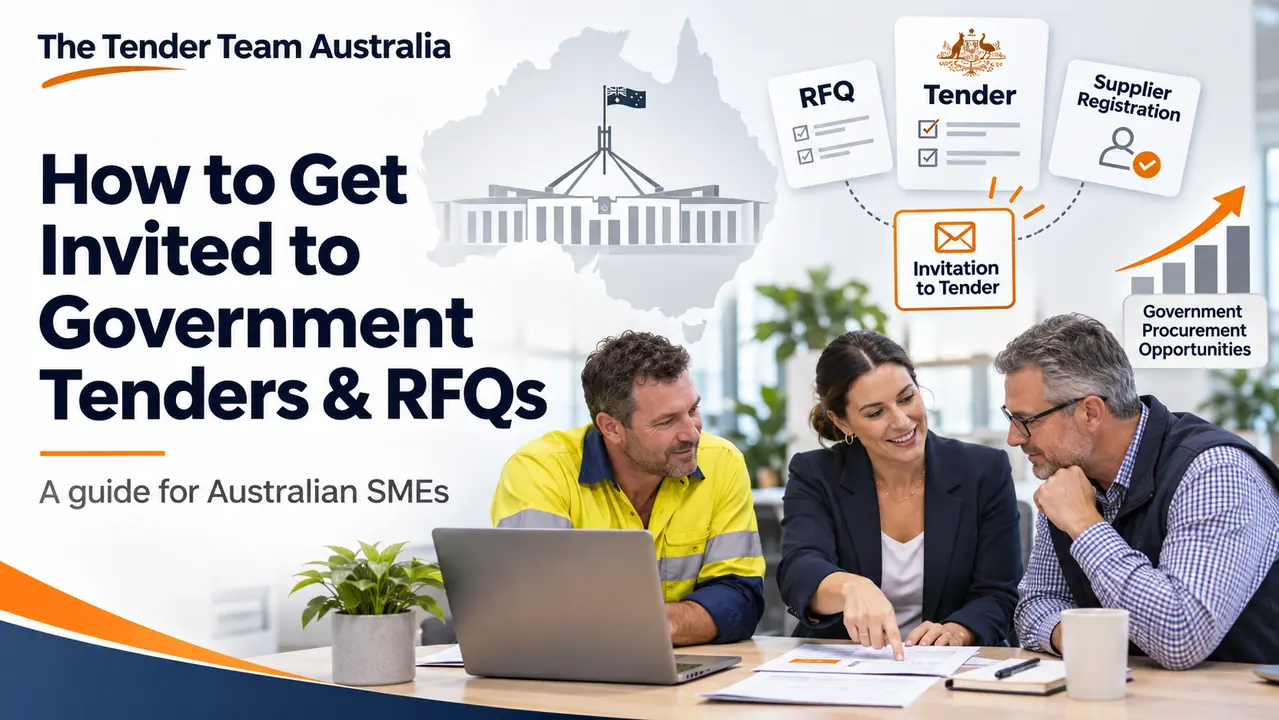
Many SMEs across Australia only bid for open tenders and don’t have a strategy to get invited to other government tenders. In Australian government and private sector tenders, not every opportunity is advertised as an open tender. There are close tenders, limited tenders and panel-based purchasing. This opens a range of opportunities for small and medium businesses to get invited to tender opportunities and secure government work.
Can a business get government work without seeing an Open Tender?
Yes – through limited tenders, RFQs and also standing offers. It depends on the jurisdiction. In commonwealth, state (different for each state) and local government tenders, there are purchasing thresholds where the government departments have to go out to tender. When purchasing below the thresholds they are permitted to purchase directly. In addition, SMEs and businesses can get work directly when they are already on a panel.
Example: IT supplier of hardware to NSW Schools
For example, a regional IT supplier who provides IT hardware to the education sector, may already be in a Department of Education Panel or another IT panel in NSW. Since they are on this panel, they can receive orders and work directly from the schools and are often permitted to market directly to the schools for work.
What changed for Australian SMEs in 2025–26 under the Commonwealth Procurement rules?
Commonwealth Procurement Rules were introduced and updated on 17 November 2025 and delivered a benefit for SMEs to access Australian Government work. Tthe general procurement threshold was increased from $80,000 to $125,000 for non-construction procurement by non-corporate Commonwealth entities and rules were introduced prioritise Australian businesses for certain below-threshold procurement opportunities. In addition, for purchases under $125,000 through specified government panels, including the Management Advisory Services Panel and People Panels, government buyers must generally invite only eligible SMEs to submit proposals.
This has created significant opportunities for SMEs across Australia to win Commonwealth Government work. There is a critical opportunity (introduced before the November 2025) changes for SMEs that were created with these changes and created a new route for SMEs to secure commonwealth government contracts up to 500K by being invited directly. It is Appendix A, Exemption 17, which allows Commonwealth government buyers to directly engage eligible SMEs for certain goods and services contracts valued up to $500,000, including GST, provided value for money can be demonstrated and other applicable requirements are satisfied.
SMEs can take advantage of this by:
- Not only focusing in advertised open tenders, but instead investing in business development directly with government.
- Creating capability statements that showcase your experience and capabilities and tailor these to the needs of government.
- Building relationships directly with relevant stakeholders and procurement personnel within government. This helps you get access to opportunities and provide capability statements to relevant personnel.
This only applies to Commonwealth Government and not state and local.
Case Study: Plumbing business bidding for Commonwealth Government work
One of our clients was a small plumbing business in a regional town. In their town in Queensland, there was a commonwealth government building and they provided some plumbing services from time to time. There was limited competition in the town for plumbing services. We worked with our client to create a capability statement and provide it to the procurement personnel. This resulted in our client being awarded a small contract directly ($40,000 per year) for maintenance services.
Registering where Government Buyers look for suppliers
It’s important to register in all of the different portals that government providers look for providers. Searching and receiving notifications for tenders and bids is one thing (and can lead to excellent opportunities). However, if you register on portals such as AusTender, there is a chance that the potential buyers will contact you directly. That is why it’s important to complete your profile in detail.
You should do this across all relevant portals including local council and the state governments and territories.
Understanding and benefiting from government panels and RFQ invitations
If you are a small business and are appointed to a government panel, there is the chance to be awarded work off the panel. Generally speaking, where there are specific works to be carried out, the relevant government department will invite one or more supplier to provide a quote.
When you win a tender and are appointed to a panel, it doesn’t mean you receive work straight away. You are then invited to quote on specific projects. The advantage is that you are pre-approved and can lobby for work directly.
Case Study: Speech Therapist appointed to Queensland Health Panel
At The Tender Team, we recently assisted a regional speech therapy with their business development. They were already on a panel for speech therapy services across Queensland but they weren’t getting any work from it and therefore no revenue. We worked with them to identify the key personnel in the government that managed the work and the panel. We create a capability statement focused on their regional presence and the easy of access for them to regional areas. This resulted in them being allocated lots of work from the panel that involved regional and remote areas, as the panel managers realized that it was more practical to employ them rather than the larger city based firms they were awarding the work to in the regional areas.
Make your business credible and easy to access to get invited to quote
It’s important to create any capability statement for your business with a similar approach to a tender. I.e. include evidence, details, capabilities and also any licenses and certifications. You need to think that the government department may employ you to complete works instead of going out to tender. So you need to cover off as much as possible that is normally included in a tender, in order to build credibility and put your mind at ease.
Start the relationship building process early
Many SMEs identify a tender opportunity and think – I should develop a relationship with them. I need to contact them and introduce ourselves and our business. However, this is generally illegal once the tender process as started. That’s why it’s a great idea to form relationships prior to any tender being released.
You can do this by:
- Calling and introducing yourselves to agencies
- Attending industry events
- Attending supplier briefings
- Introduce your business where possible.
You won’t get preferential treatment, but you will get a chance to meet people and introduce yourself and your business.
Mistakes SMEs make across Australia that reduce your chances of being considered or invited for government work
Some common mistakes business make that negatively impact their chances include:
- Relying on alerts from AusTender and other council and state government portals only.
- Not completing full business profiles in all of the commonwealth, state and federal government portals.
- Joining panels which there is no real chance of getting work as they are irrelevant to their business.
- Not putting enough effort into capability statements including not using graphics.
- Not reviewing buyer specific requirements.
From our experience here at The Tender Team, we think the biggest limitation is not creating professional, polished profiles with the right keywords on all government portals.
Do you need help preparing a Government Tender or RFQ response?
Call our team here at The Teder Team and speak with our Director, Jason Cooney. He has a track record of creating profiles, capability statements and putting strategies in place to help SMEs get government work without having to respond to open tenders.
We work with you to help you win work with all sectors of government, through the tender process or directly!